Blogs
How AR and VR Help Homeowners Choose Doors and Interior Finishes
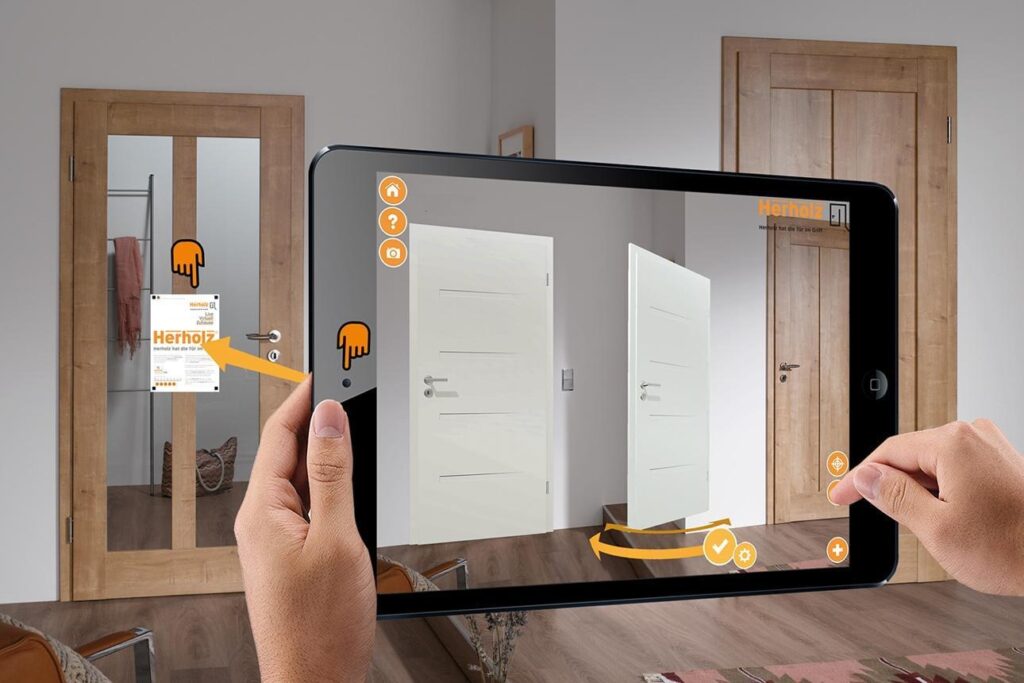
Building or renovating a home involves countless design decisions from selecting the AR VR for interior design for right door style to choosing wall panels, kitchen finishes, and wardrobe colours. While brochures and showroom displays provide inspiration, they often fail to answer one important question:
AR & VR for Interior Design: Quick Summary
- AR: Visualizes individual products inside an actual room.
- VR: Creates an immersive preview of complete interior spaces.
- Doors: Compare styles, colours, sizes and finishes.
- Wall panels: Preview textures and colour combinations.
- Kitchens: Compare layouts, cabinets and finishes.
- Wardrobes: Visualize colours, storage layouts and designs.
- Renovations: Identify potential design issues before installation.
How will this product actually look in my home?
This is where AR (Augmented Reality) and VR (Virtual Reality) are transforming the home improvement industry. These technologies allow homeowners to visualize products inside their own spaces before making a purchase, reducing uncertainty and improving confidence in design decisions.
Whether you’re selecting modern doors, decorative wall panels, modular kitchens, or wardrobes, AR VR for interior design offers a smarter and more interactive buying experience.
How Do AR and VR Help Homeowners Choose Doors and Interior Finishes?
AR and VR help homeowners visualize doors, wall panels, wardrobes, kitchens, colours, textures, and interior finishes before installation. AR places virtual products inside the homeowner’s actual space, while VR creates immersive digital environments where complete interiors can be explored before making final design and purchasing decisions.
What Are AR and VR in Interior Design?
Although often mentioned together, AR and VR serve different purposes in interior design.
Augmented Reality (AR)
Augmented Reality overlays digital objects onto the real world using a smartphone, tablet, or AR-enabled device. Homeowners can virtually place doors, wall panels, furniture, or interior finishes in their own rooms to see how they will look before purchasing.
Virtual Reality (VR)
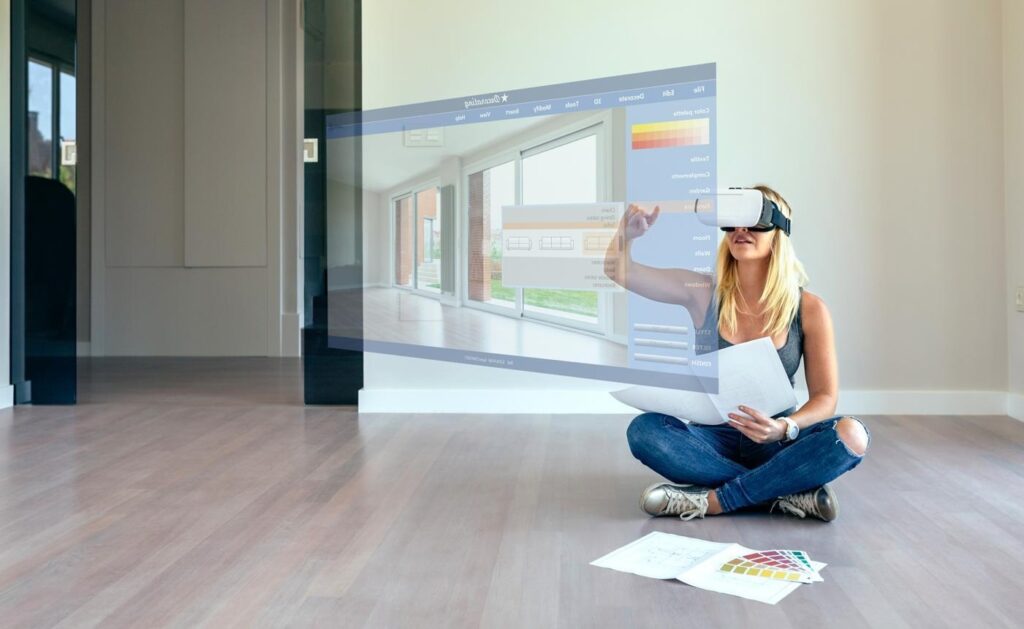
Virtual Reality creates a fully immersive digital environment where users can walk through a complete home design before construction or renovation begins. Using a VR headset, homeowners can explore rooms, compare layouts, and experience different finishes in real time.
Together, AR and VR bridge the gap between imagination and reality, helping homeowners make informed design choices.
Why Homeowners Need Better Visualisation Before Choosing Interiors
Choosing interior products from small samples or catalogues can be challenging. Colours may appear different under various lighting conditions, and it can be difficult to imagine how multiple materials will look together.
Common concerns include:
- Will this door match my flooring?
- Is this wall panel too dark for my living room?
- Which wood finish suits my furniture?
- Will this colour make the room look smaller?
- How will the complete interior look after installation?
How AR Helps Homeowners Select Doors
AR and VR answer these questions by providing realistic visual previews before any purchase or installation.
One of the most practical uses of AR is the virtual door visualizer. Instead of guessing which design will suit your home, homeowners can use AR-enabled applications to see different door options directly on their walls or entryways.
With AR, users can:
- Compare multiple door designs instantly
- Try different colours and finishes
- Visualize door sizes and proportions
- Match doors with flooring and wall colours
- See the overall appearance before placing an order
This interactive approach helps eliminate uncertainty and improves confidence when choosing interior or exterior doors.
How VR Helps in Complete Interior Planning
While AR focuses on individual products, VR allows homeowners to experience an entire home virtually before work begins.
A VR walkthrough can include:
- Living rooms
- Bedrooms
- Kitchens
- Bathrooms
- Dining spaces
- Hallways
- Balconies
Users can move through these virtual spaces, evaluate layouts, and experiment with different combinations of doors, wall panels, furniture, and lighting.
This immersive experience helps identify design issues early, reducing the likelihood of costly changes later.
How AR and VR Help Choose Different Interior Products
| Product | How AR/VR Helps |
| PVC Doors | Compare colours, designs and finishes |
| Wall Panels | Preview textures and feature-wall combinations |
| Fluted Panels | Visualize grooves, colours and placement |
| Wardrobes | Compare finishes and storage layouts |
| Modular Kitchens | Evaluate cabinet colours and layouts |
| TV Units | Test wall-panel and furniture combinations |
| Storage Cabinets | Compare placement and finishes |
| Complete Interiors | Preview overall room coordination |
Choosing the Right Door Colour and Finish with AR/VR
Door colour and finish play a significant role in defining the character of a home. A finish that looks attractive in a catalogue may not complement the room’s lighting or décor once installed.
AR and VR make it easier to compare options such as:
- Woodgrain finishes
- White and neutral shades
- Matte textures
- Glossy finishes
- Contemporary colours
- Minimalist designs
By viewing these options within the actual room, homeowners can confidently choose finishes that match their interior theme.
Selecting Interior Wall Panels with Virtual Visualisation
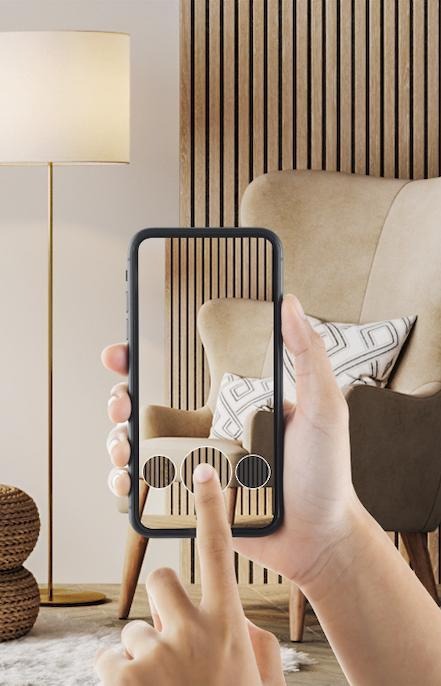
Wall panels have become a popular feature in modern interiors, especially for TV units, bedrooms, offices, and reception areas. Since texture and colour significantly influence the overall ambience, visualization is essential.
AR and VR allow homeowners to:
- Preview fluted panels on feature walls
- Compare decorative panel finishes
- Experiment with colour combinations
- Evaluate different textures
- Understand how lighting affects the final appearance
Virtual visualization ensures that the selected wall panels complement the rest of the interior before installation.
How AR/VR Reduces Design Confusion
Many homeowners struggle to imagine how different materials and finishes will work together. AR and VR simplify this process by providing realistic previews that make comparisons easy.
These technologies help users:
- Compare multiple design options side by side
- Make informed decisions with confidence
- Avoid mismatched colours and finishes
- Reduce uncertainty before purchasing
- Visualize complete spaces rather than isolated products
As a result, homeowners can make better choices with fewer revisions during the project.
Benefits of AR and VR for Home Renovation
Home renovation often involves replacing doors, updating wall finishes, and redesigning living spaces. AR and VR make these projects more efficient by improving planning and communication.
Key benefits include:
- Better design confidence
- Improved colour matching
- Faster product selection
- Fewer installation changes
- Can help reduce material waste
- Enhanced customer satisfaction
- Better collaboration with designers and contractors
These advantages help create smoother renovation experiences while May reduce unnecessary design changes.
AR/VR for Kitchens, Wardrobes and Modular Interiors
AR and VR are not limited to doors and wall panels. They also simplify the planning of modular interiors throughout the home.
Applications include:
- Modular kitchens
- Wardrobes
- Storage cabinets
- Entertainment units
- Study rooms
- Office interiors
- Utility areas
Homeowners can experiment with different layouts, finishes, and colour schemes before construction begins, helping ensure that the final design aligns with their vision.
How AR and VR Improve the Buying Experience
Modern consumers expect more than printed catalogues and showroom samples. AR and VR create an engaging buying experience by allowing customers to interact with products before making a purchase.
Advantages include:
- Greater purchasing confidence
- Better product understanding
- Reduced design uncertainty
- Faster decision-making
- Improved customer satisfaction
- Can improve purchasing confidence
- Helps identify potential design mismatches earlier
These technologies make the buying journey more transparent and customer-focused.
Why AR and VR Are the Future of Interior Product Selection
As digital technologies continue to evolve, AR and VR are becoming valuable tools in the interior design industry. They help homeowners visualize products in real-world settings, reducing guesswork and enabling more informed purchasing decisions.
For manufacturers, architects, and retailers, these technologies also improve communication with customers by presenting products in a realistic and interactive way.
Why Choose Sarvesh for Modern Doors and Interior Finish Solutions?
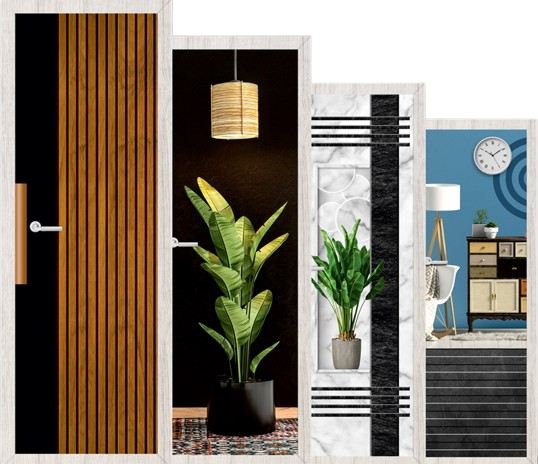
Sarvesh offers a wide range of premium interior solutions designed for modern homes, apartments, villas, and commercial projects. From stylish PVC doors to decorative wall panels and modular interior materials, Sarvesh products combine durability with contemporary design.
Why Homeowners Choose Sarvesh
- Premium-quality PVC doors
- Decorative wall panel solutions
- Waterproof and termite-resistant products
- Modern colours and finishes
- Low-maintenance materials
- Durable and long-lasting performance
- Suitable for residential and commercial interiors
- Designed for contemporary Indian homes
Whether planning a renovation or designing a new home, Sarvesh provides reliable interior solutions that combine functionality with aesthetics.
How Virtual Visualization Improves Interior Product Selection
Step 1 – Select the room
Choose the living room, bedroom, kitchen, bathroom, or other area.
Step 2 – Select the product
Choose doors, wall panels, wardrobes, cabinets, or other finishes.
Step 3 – Compare designs
Experiment with colours, textures, sizes, and finishes.
Step 4 – Check compatibility
See how the product works with flooring, walls, lighting, and furniture.
Step 5 – Shortlist options
Compare the most suitable combinations.
Step 6 – Finalize the product
Confirm specifications, measurements, price, and installation requirements before purchase.
AR and VR Interior Selection for Homes in India
Indian homeowners are increasingly embracing digital tools to simplify home design decisions. AR and VR make it easier to visualize products before installation, reducing uncertainty and helping families create interiors that reflect their personal style.
These technologies are particularly useful for:
- New home construction
- Apartment renovations
- Villa interiors
- Commercial office spaces
- Hospitality projects
- Retail showrooms
By enabling realistic previews, AR and VR help homeowners make better decisions with greater confidence.
AR and VR Interior Selection for Homes in Bangalore, Hyderabad, Chennai, Delhi & Tamil Nadu
Homeowners in Bangalore, Hyderabad, Chennai, Delhi, and across Tamil Nadu can use AR and VR tools to make more informed interior design decisions before purchasing doors, wall panels, wardrobes, kitchens, and other interior finishes.
For apartments in Bangalore and Hyderabad, virtual visualization can help homeowners evaluate colours, layouts, and finishes within limited spaces before installation. In Chennai and other parts of Tamil Nadu, homeowners can compare interior materials and finishes according to their room design and preferences, while homeowners in Delhi can use digital visualization to coordinate doors, decorative panels, furniture, and modern interior themes.
Whether designing an apartment, villa, or commercial interior, AR and VR can make it easier to compare different product combinations and understand how the final space may look before making a purchase.
Choosing Doors and Interior Finishes for Apartments and Villas
Apartments and villas often have different design requirements. AR and VR allow homeowners to explore various combinations of doors, wall panels, flooring, and finishes based on the size and layout of their property.
For apartments, visualization helps maximize space and coordinate compact interiors. For villas, it supports the planning of larger areas, ensuring consistency across multiple rooms.
This flexibility allows homeowners to personalize their interiors before making any final selections.
What AR and VR Cannot Replace
While AR and VR can improve visualization, they should not replace physical product evaluation entirely. Screen colours, lighting conditions, device displays, and digital rendering can affect how materials appear.
Before finalising doors or interior finishes, homeowners should still verify:
- Actual product samples
- Material specifications
- Measurements
- Colour and texture
- Installation requirements
- Warranty
- Price and availability
AR/VR Solutions for Homeowners, Interior Designers and Contractors
AR and VR technologies demonstrate how digital visualization can support the selection of interior products such as PVC doors, wall panels, kitchens, and wardrobes. Sarvesh offers interior product solutions across these categories, giving homeowners a range of colours, finishes, and designs to consider for their projects.
AR and VR benefit everyone involved in a project:
Homeowners
- Visualize products before purchase
- Make confident design decisions
- Reduce the risk of costly changes
Interior Designers
- Present realistic design concepts
- Collaborate more effectively with clients
- Streamline the approval process
Contractors and Builders
- Improve communication with customers
- Minimize design misunderstandings
- Deliver projects more efficiently
By aligning expectations early, these technologies contribute to smoother project execution and higher customer satisfaction.
Frequently Asked Questions
How does AR help in choosing doors?
AR allows homeowners to place virtual door designs within their own spaces using a smartphone or tablet. This helps compare colours, styles, and finishes before making a purchase.
How does VR help in interior design?
VR creates immersive virtual environments where users can explore complete room layouts, experiment with materials, and evaluate interior designs before construction or renovation begins.
Can AR and VR help choose wall panels?
Yes. AR and VR make it easier to visualize decorative wall panels, compare textures and colours, and understand how they will look under different lighting conditions within a room.
Why are AR and VR useful for homeowners?
They reduce uncertainty by providing realistic previews of products, enabling better planning, minimizing design changes, and increasing confidence in purchasing decisions.
Can AR/VR be used for kitchen and wardrobe finishes?
Absolutely. AR and VR allow homeowners to compare cabinet colours, door finishes, storage layouts, and material combinations for kitchens, wardrobes, and other modular interiors before installation.
Trending Blogs
-
#1. Best Ready-Made Plastic Bathroom Doors for Indian Homes
-
#2. Best PVC Wall Panel Designs for a Modern Living Room in India
-
#3. How to Choose the Right WPC Door and Frames for Your Home
-
#4. PVC Doors vs Wooden Doors: Which Is Better for Indian Homes?
-
#5. Fluted Panels vs Soffit Panels: Which One Do You Need?
-
#6. Why Is uPVC Furniture the Best Choice for Modern Home Interiors?
-
#7. Which PVC Wall Panels Are Best for Modern Living Room Designs
-
#8. Why ABS Doors Are the Best Choice for Bathrooms and Homes in India
-
#9. Understanding WPC Doors: Structure WPC and Solid WPC
-
#10. Why Choose uPVC? Benefits for Modern Construction & Interiors
Latest Blogs
Download Brochure
Looking for the Perfect Doors & Windows for Your Space?

Contact Us
LET'S TALK
Looking to upgrade your space with premium doors, windows, or decorative solutions? Whether you're an architect, builder, or homeowner, our team is here to support your project from concept to completion.

© 2026, Sarvesh. All rights reserved.